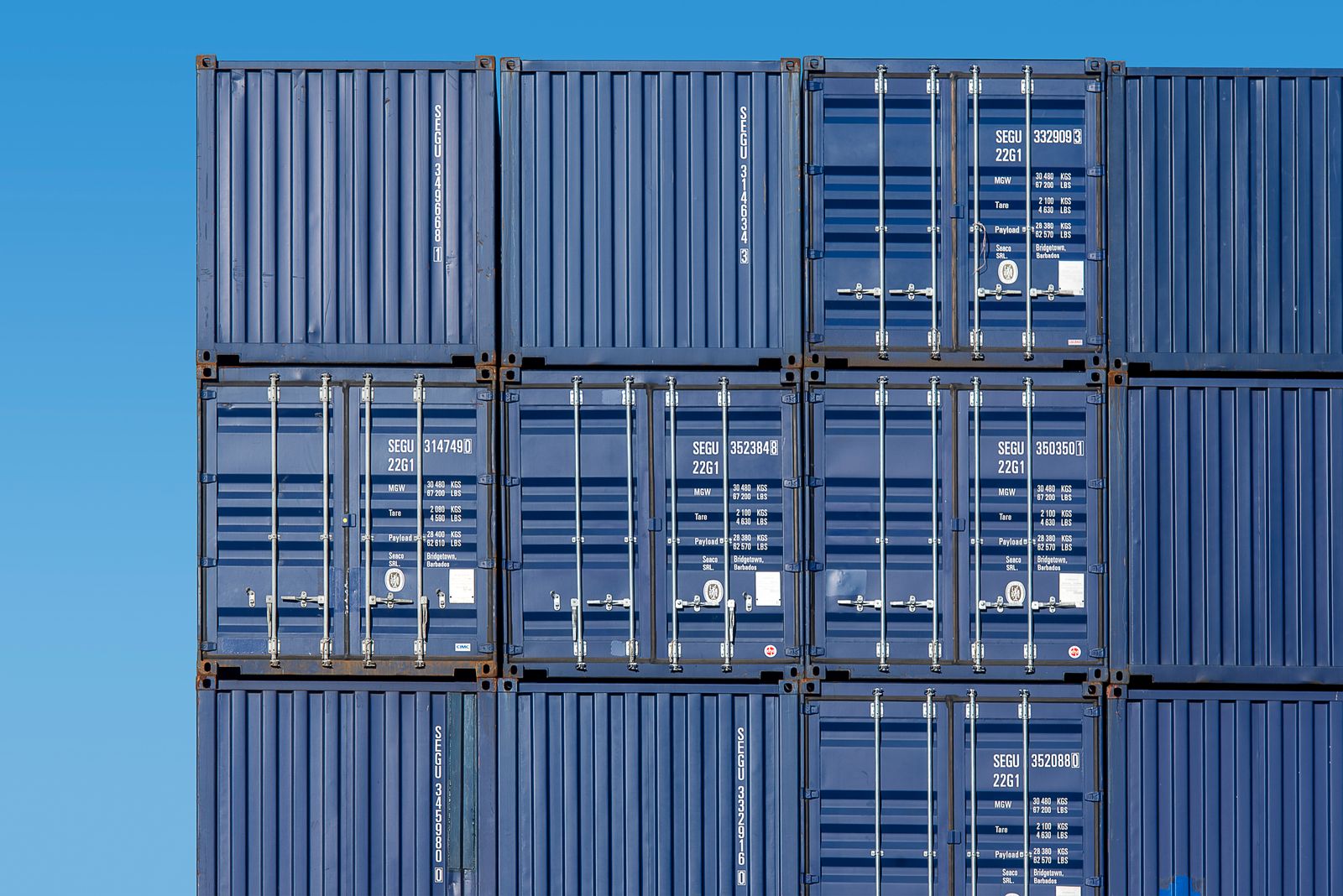
The invoice arrived with the container, and the importer stared at it for a long time before calling the broker. The entry fee was $150, exactly what the broker had quoted. The total was several hundred dollars more. Between the quote and the total sat a line for the Importer Security Filing, a line for three extra tariff lines, a line for a Food and Drug Administration filing the importer had not known it needed, a disbursement fee calculated as a percentage of the duty the broker had advanced, and two government fees the broker had passed straight through. Nothing on the invoice was wrong. Nothing on it had been in the quote, either. The broker had charged what brokers charge. The importer had priced what the broker had quoted. The gap between the two is the whole business of understanding a customs broker’s fee.
A customs broker’s bill is built from four layers, and the entry fee — the number everyone quotes — is only the first. For a standard formal entry in 2026, the Artemus Group’s fee guide puts the broker’s own charge at $150 to $500 for an ocean entry and $100 to $450 for air, with informal entries under $2,500 at $75 to $150 and complex entries involving the FDA, the Department of Agriculture, or antidumping duties at $250 to $800. Importivity’s 2026 guide, drawn from published broker fee schedules, puts the same work lower: $125 to $175 for a formal ocean entry, $95 to $150 for air, $60 to $95 for an informal entry, with high-volume importers negotiating down to $75 to $110. The two guides disagree by a hundred dollars on the same shipment, and both are right: two brokers in the same port will quote differently, and the headline fee is the least informative line on the invoice.
The add-ons are the bill
The second layer is the add-ons, and this is where a $150 entry becomes a $600 invoice. The Importer Security Filing — the “10+2” filing due before the vessel is loaded — runs $50 to $85 per ocean shipment at Importivity’s figures, $30 to $50 at FedLaws’. The base entry fee usually includes three to five tariff lines; each extra line costs $3 to $10, so a forty-SKU container can double the entry fee quietly, in Importivity’s phrase. Agency filings run $15 to $50 per partner government agency per entry. And the largest add-on on a dutiable shipment is usually the disbursement fee: 2 to 3 percent of any duty, tax, or fee the broker pays to CBP before the importer reimburses it. On a shipment with $20,000 of duty, the disbursement fee alone is $400 to $600 — more than the entry fee itself — and it is the one line the importer can remove by paying CBP directly instead of letting the broker advance the money. Artemus puts the all-in cost for one ocean container, before duty, at usually $300 to $700: entry fee, government fees, bond, and ISF together.
The third layer is the government, and the broker passes it through at cost. The Merchandise Processing Fee is 0.3464 percent of the entered value on a formal entry, with a minimum of $34.58 and a maximum of $670.86 per entry for fiscal year 2027, which began October 1, 2026 — the figures CBP set in its annual inflation adjustment, reported by both Artemus and Importivity. The Harbor Maintenance Fee is 0.125 percent of value on ocean cargo. A $25,000 shipment pays $86.60 in MPF, as Chacon Logistics’ worked example shows; a $100,000 shipment pays $346.40. These are CBP’s charges, not the broker’s, and a broker that marks them up is a broker to leave. The fourth layer is the bond. A single-entry bond runs $45 to $120 per shipment, more for FDA cargo, while a continuous bond at the $50,000 minimum — CBP sets the amount at the greater of $50,000 or 10 percent of the duties, taxes, and fees paid in the prior twelve months — costs about $400 to $600 a year in premium from most sureties. An importer filing more than a handful of entries a year spends less on the continuous bond than on single-entry bonds, and the continuous bond is also what the ISF filing draws on.
What the fee buys, and when it pays for itself
The fee buys more than filing. A licensed broker classifies the goods, calculates the duties, posts the bond, files the ISF, and talks to CBP when the entry is questioned — and the license behind that work is hard to get. The customs broker exam has a historical pass rate of around 15 percent, according to LNH31’s selection guide, and the license is issued by CBP after the exam. The broker also carries the reasonable-care standard: under the Customs Modernization Act of 1993, the importer — not the broker — bears the legal burden of correct classification and valuation, and a wrong tariff code can draw penalties under 19 U.S.C. § 1592 of up to twice the lost duties for negligence, four times for gross negligence, and the full domestic value of the goods for fraud. The broker’s real product is not the filing. It is the second pair of eyes on the code that decides the duty.
That is the arithmetic that decides whether a broker pays for itself. An importer filing one informal entry a month under $2,500 can file it alone for the cost of the MPF and the bond, and the broker’s $60 to $95 adds little. An importer filing formal entries with forty tariff lines, an FDA filing, and $20,000 of duty a shipment is paying $300 to $700 a container before duty — and a single misclassification caught by the broker, at 3 percent of a $50,000 shipment value, is $1,500 of duty per container, $300,000 a year across two hundred containers, by LNH31’s worked example. The broker pays for itself the first time it catches a code the importer copied forward from a supplier’s invoice three years ago. It does not pay for itself when the importer’s freight is simple, the values are low, and the codes have not changed since the account was set up.
The counterargument: the cheapest broker is often the most expensive
It is tempting to shop the entry fee, and it is the wrong line to shop. The broker quoting the lowest per-entry fee often makes up the difference on ancillary charges, as LNH31 warns — the $95 entry with $10 a line, a $50 agency filing, and a 3 percent disbursement fee costs more per container than the $175 entry with the ISF bundled and no disbursement fee. The fee schedule is the document that matters, not the quote, and it should be compared line by line: entry fee, ISF, per-line charges, agency filings, disbursement percentage, bond handling, and what happens when CBP sends a request for information. A broker that answers that request is doing the work the fee is for. A broker that forwards it unread is charging for a filing the importer could have done alone.
There is a second counterargument, and it cuts the other way: for the simplest importers, no broker is the right answer at all. The $800 de minimis exemption that once let small parcels in duty-free closed in 2026 — Executive Order 14324 ended it, and CBP’s final rules of June 24, 2026 wrote the suspension into the regulations — so the small-parcel importer now faces formal entry and its fees on shipments that used to clear for nothing. For that importer, the honest answer is not a cheaper broker. It is fewer, larger shipments, or a supplier that ships DDP, or a product whose classification is genuinely simple enough to file in-house. The broker’s fee is a cost of importing, and like every cost of importing it should be priced per container, per year, against the duty it protects — not admired or resented one invoice at a time.
Sources: Artemus Group, “Custom Broker Fees In 2026: Full Cost Breakdown” (October 2026) — formal ocean entry $150–$500, air $100–$450, informal $75–$150, complex/PGA $250–$800; MPF 0.3464%, minimum $34.58, maximum $670.86 from October 1, 2026; all-in one ocean container usually $300–$700 before duty, https://artemusgroupusa.com/custom-broker-fees/. Importivity, “Customs Broker Cost and How to Choose One” (November 2026) — formal ocean $125–$175, air $95–$150, informal $60–$95, high-volume $75–$110; ISF $50–$85; extra HTS lines $3–$10; agency filings $15–$50; disbursement fee 2–3% of duty advanced; single-entry bond $45–$120, continuous bond $400–$600 a year, https://importivity.com/blog/customs-broker-cost-and-how-to-choose/. Chacon Logistics, “How to Choose US Customs Brokerage Services in 2026?” (updated September 23, 2026) — MPF on $25,000 value $86.60, on $100,000 value $346.40; flat $125 entry fee examples, https://www.chaconlogistics.com/blog/choosing-us-customs-brokerage-services-in-2026/. FedLaws, “How Much Are US Customs Clearance Fees?” (2026) — standard entry fee $150–$300; ISF $30–$50; continuous bond minimum $50,000, premium $500–$1,000 a year, https://fedlaws.org/how-much-are-us-customs-clearance-fees-duties-brokers/. LNH31, “Customs Broker Selection and Evaluation Criteria Guide” (August 18, 2026) — broker exam historical pass rate around 15%; 3% misclassification on a $50,000 shipment is $1,500 per container, $300,000 a year across 200 containers, https://lnh31.com/blog/customs-broker-selection-evaluation-criteria. CBP, “How CBP Sets Bond Amounts” (Publication No. 3569-0224, February 2024) — continuous bond the greater of $50,000 or 10% of duties, taxes, and fees paid in the prior 12 months. Landed Cost Hub, “Importing to the USA in 2026” (updated September 14, 2026) — Executive Order 14324 closed the $800 de minimis exemption; CBP final rules of June 24, 2026, https://landedcosthub.com/guide/importing-to-usa/.
Sources
- 19 U.S.C. § 1313; 19 CFR Part 190 — duty drawback statute and regulations, including the five-year filing window (§ 1313(r)) and the three-year record-retention rule (19 CFR 190.15).
- CargoTrans — Duty Drawback Services: managed drawback service on the Captain platform; free five-year drawback assessment.
- RSK — Clarity platform and IEEPA Managed Recovery Program: 7,500+ entities assisted, $3B+ in recoveries supported.
- DrawbackHQ — contingency drawback recovery: average missed refund above $40,000 (firm's claim).
- One Eagle Advisory — duty drawback recovery: 99% refund, five-year lookback.
- AmzPrep — Duty Drawback Guide: CBP refunds roughly $1B per year through drawback.
- LightSource AI — Duty Drawback Practical Guide, 2026: ~80% of eligible refunds unclaimed, ~$15B per year (industry estimate).
- CBP CSMS message 42421561 — Section 301 duties confirmed recoverable through drawback.
- Federal Reserve Bank of New York, Liberty Street Economics, February 12, 2026 — "Who Is Paying for the 2025 U.S. Tariffs?": average tariff rate 2.6% to 13%.
- Congressional Budget Office — IEEPA duties eligible for refund, about $166 billion.